
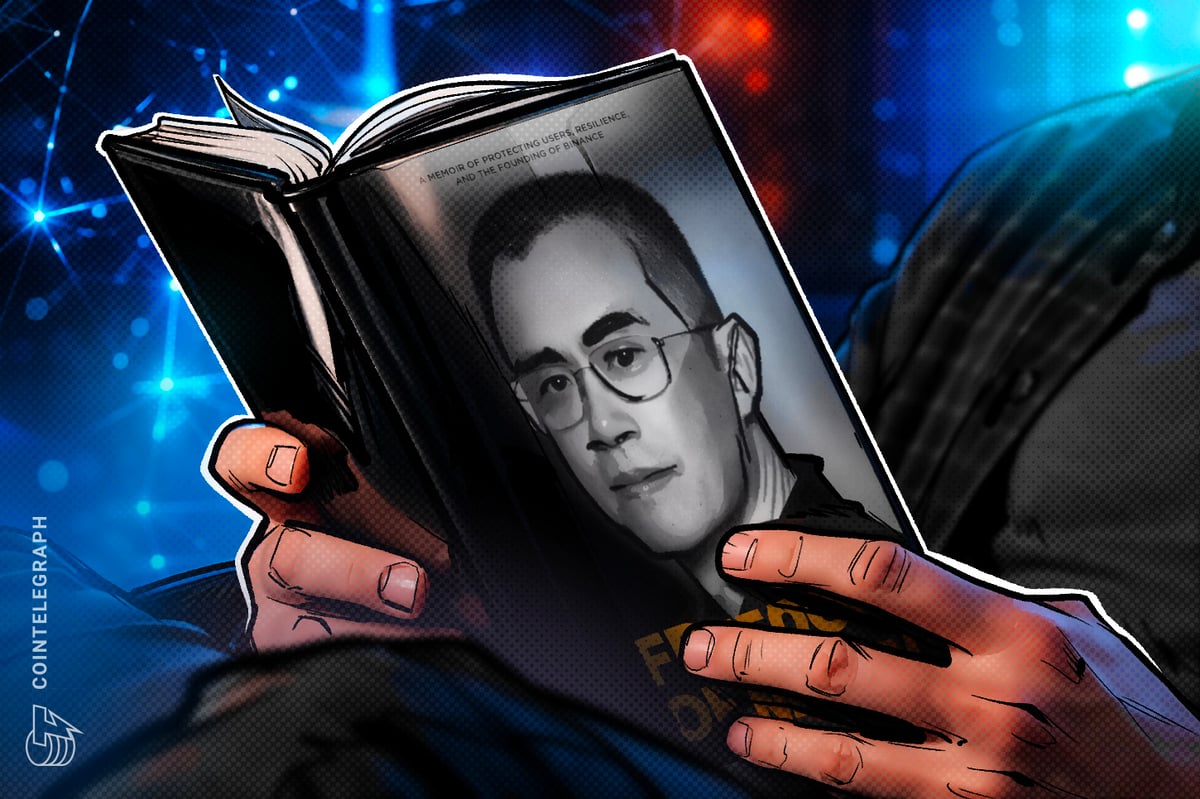
Changpeng “CZ” Zhao became a household name in the cryptocurrency sector after founding Binance, the world’s largest crypto exchange. Following a series of legal and regulatory challenges that culminated in a prison sentence, Zhao has authored an autobiography recounting his rise — and subsequent fallout.
The 364-page manuscript, titled Freedom of Money, presents a first-person account of Zhao’s life and career. The foreword is written by Yi He, a Binance co-founder who has worked with Zhao since 2014.
Zhao writes that his story has been shaped by media coverage, court filings and public commentary. He describes the book as an account intended to provide additional context to those narratives.
Throughout the memoir, Zhao emphasizes the human dimension behind Binance’s rapid ascent — and his personal and professional downfall — which he argues has been lost in soundbite-driven coverage.
The memoir covers his early life and career in finance and technology, as well as the founding of Binance in 2017. It outlines the company’s rapid growth into one of the world’s largest cryptocurrency exchanges.
Regulatory failures and accountability
Zhao served a four-month prison sentence in the United States in 2024 after pleading guilty to violating US Anti-Money-Laundering laws, as part of a broader settlement with authorities that also required him to step down as Binance CEO.
The case marked a major enforcement action by the US Department of Justice, which had initially sought a longer sentence to reflect the severity of the violations. Binance, for its part, agreed to pay billions of dollars in penalties and implement sweeping compliance reforms.
US regulators had for years scrutinized Binance over alleged failures related to anti-money laundering controls, sanctions compliance and operating without proper licensing. The settlement effectively closed one of the most high-profile investigations in the crypto industry.
In the memoir, Zhao reflects on the decisions and missteps that led to these outcomes. He recounts the events surrounding the settlement, his guilty plea and his resignation, describing the tradeoffs made during Binance’s rapid growth.
The book also includes detailed descriptions of his time in federal prison, including the adjustment from leading a global company to living in a confined environment.

Related: Binance led Q1 crypto derivatives as Hyperliquid cracked top 10: CoinGlass
“Freedom of money”
The book’s title reflects a central theme of the memoir. Zhao describes the “freedom of money” as the idea that cryptocurrency can address barriers to financial access, particularly in countries with limited banking infrastructure or strict capital controls.
He links part of Binance’s growth to users in emerging markets who used the platform to move funds across borders, hedge against local currency volatility and access global financial markets.
Zhao also acknowledges that expanding access at scale introduced challenges. He writes that Binance’s rapid growth often outpaced regulatory frameworks, contributing to gaps in compliance and oversight that later drew scrutiny from authorities.
Related: Crypto’s 2026 investment playbook: Bitcoin, stablecoin infrastructure, tokenized assets