Dfns Integrates Concordium Blockchain For Compliant Web3 Wallets

Dfns, a digital wallet infrastructure provider and a partner of tech giant IBM, has integrated Concordium’s layer-1 (L1) blockchain to launch an identity-verified Web3 wallet solution. Concordium’s privacy-preserving identity layer is now part of Dfns’ wallet-as-a-service (WaaS) platform, the companies announced Wednesday in a joint statement shared with Cointelegraph. “This integration enables financial institutions and enterprises to instantly deploy compliant, privacy-preserving wallets without building complex identity infrastructure from scratch,” Dfns CEO Clarisse Hagège said. The move follows the recent collaboration of Dfns with IBM to launch IBM Digital Asset Haven…

Blockchain Innovation Must Rise Above Politics And Serve Real-World Needs

Opinion by: Marcos Viriato, co-founder and CEO of Parfin Blockchain was born to decentralize power and create systems that operate on transparency, not control. Yet today, the technology is being adopted by the institutions it sought to disrupt.  Governments and corporations are integrating blockchain into their existing frameworks. This turns a tool built for autonomy into one that reinforces oversight. This shift reveals a deeper tension. Ideologies have become involved. From political donations to manifesto pledges, blockchain has become a political instrument. The result is a shift in how power,…

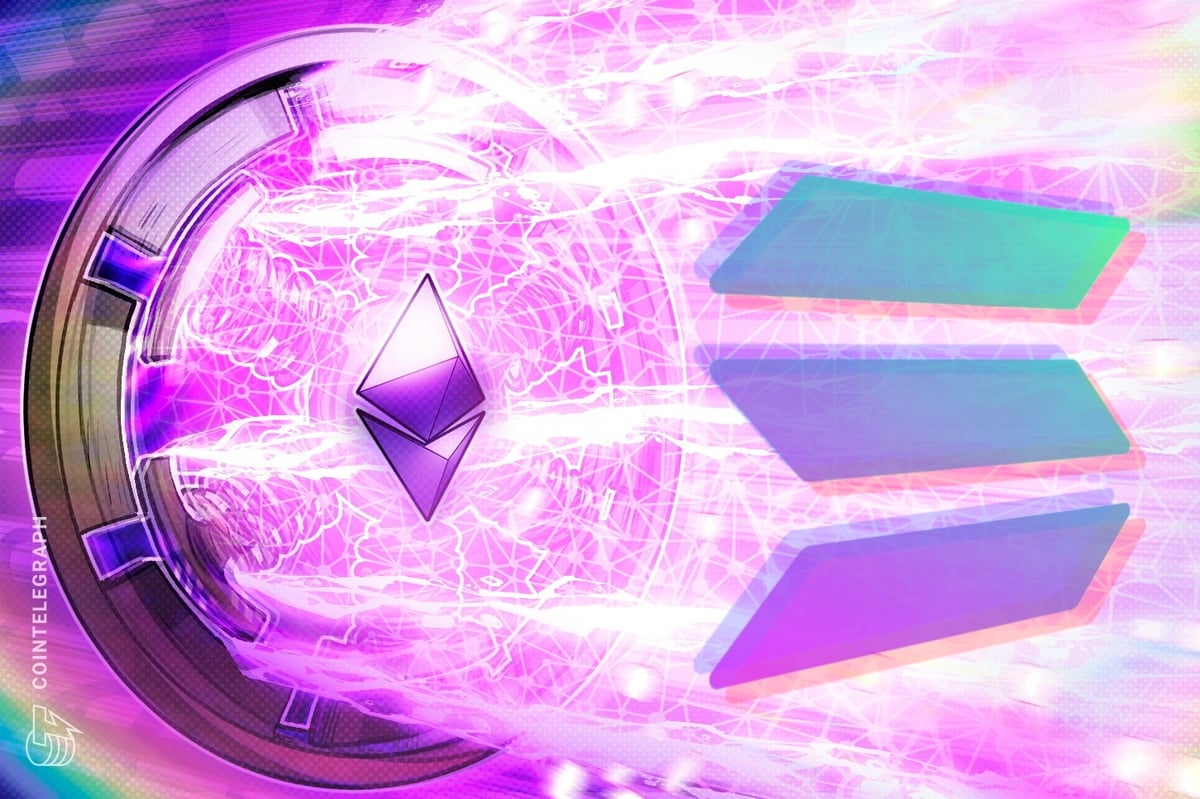
Ethereum and Solana Taking Different Paths to Blockchain Resilience

Ethereum and Solana are not only separated by questions of scalability, they are increasingly divided by competing visions of what blockchain networks must be built to withstand in the future. Recent remarks from the co-founders of each network revealed two competing definitions of “resilience,” rooted in different assumptions about risk, infrastructure and the future shape of blockchain adoption. In an X post revisiting Ethereum’s Trustless Manifesto, co-founder Vitalik Buterin framed resilience as protection against catastrophic failure, including political exclusion, infrastructure collapse, developer disappearance and financial confiscation.  Buterin argued that Ethereum…

Vitalik Buterin Claims ZK-EVMs And PeerDAS Have Solved Blockchain Trilemma

Ethereum co-founder Vitalik Buterin claims Ethereum has “solved” one of the biggest challenges in crypto: the blockchain trilemma. In a Saturday X post, Buterin emphasized the potential of peer data availability sampling (PeerDAS) and Zero-Knowledge Ethereum Virtual Machines (ZK-EVMs), noting that these two upgrades are making Ethereum become “a fundamentally new and more powerful kind of decentralized network.” “Now, Ethereum with PeerDAS (2025) and ZK-EVMs (expect small portions of the network using it in 2026), we get: decentralized, consensus and high bandwidth,” he said, adding:  “The trilemma has been solved…

Can Blockchain Prove What’s Real Online Versus AI?

How often have you come across an image online and wondered, “Real or AI”? Have you ever felt trapped in a reality where AI-created and human-made content blur together? Do we still need to distinguish between them? Artificial intelligence has unlocked a world of creative possibilities, but it has also brought new challenges, reshaping how we perceive content online. From AI-generated images, music and videos flooding social media to deepfakes and bots scamming users, AI now touches a vast part of the internet. According to a study by Graphite, the…

Tom Lee says blockchain and AI could turn JPMorgan and Goldman Sachs into next Mag 7

Key Takeaways According to Tom Lee, banks stand to be major beneficiaries of both artificial intelligence and blockchain technology. Lee suggested that banks like JPMorgan and Goldman Sachs could be the next Mag 7. Share this article Major financial institutions could see margin expansion by adopting artificial intelligence (AI) and blockchain technologies, said Fundstrat’s Tom Lee in a recent interview with CNBC. He suggested that tech-forward banks like JPMorgan and Goldman Sachs could become the next Magnificent Seven-style leaders. “Financial services companies are really big beneficiaries of AI, and they’re…

Arizona Lawmaker Proposes Barring Taxes on Crypto and Blockchain

Arizona state Senator Wendy Rogers has proposed two bills and a resolution in an effort to change the state’s laws on taxing digital assets. In legislation prefiled with the Arizona Senate on Friday, Rogers proposed amending state statues to exempt virtual currency from taxation (SB 1044), barring counties, cities and towns from taxing or fining entities running blockchain nodes (SB 1045), and amending the state constitution’s definition of property taxes to clarify rules on digital assets (SCR 1003). The blockchain node bill may move through the state legislature, but the…

Blockchain and AI Vibe-Coding To Dethrone Amazon Web Servies: Crypto exec

The rise of AI-powered no-code tools that allow users to create applications through linguistic prompts rather than computer code, decentralized through blockchain technology, will challenge Amazon Web Services’ (AWS) dominance of the cloud computing market. No-code tools will democratize access to app creation and custom-tailored user experiences that will require constant updates and maintenance from AI, Lomesh Dutta, vice president of growth at the Dfinity Foundation, a non-profit organization that guides development of the Internet Computer Protocol (ICP) ecosystem, told Cointelegraph. This rise of user-created applications eliminates the need for…

Blockchain Association Petitions US Lawmakers, for Crypto Customer Rewards

The Blockchain Association, a non-profit crypto advocacy organization, wrote a letter to the US Senate Committee on Banking, signed by over 125 crypto industry groups and companies, opposing the ban on third-party service providers and platforms offering customer rewards to stablecoin holders. Expanding the prohibition on stablecoin issuers sharing yield directly with customers, outlined in the GENIUS stablecoin regulatory framework, to include third-party service providers stifles innovation and leads to “greater market concentration,” the letter said. The letter compared the rewards offered by crypto platforms to those offered by credit…

Blockchain Fragmentation Is Costing Tokenized Assets Billions

Fragmentation across blockchain networks is already imposing a measurable economic cost on the tokenized asset market, with inefficiencies translating into up to $1.3 billion in annual value drag.  In a report sent to Cointelegraph, real-world asset (RWA) data provider RWA.io argued that while blockchains accelerated innovation, they also created walls that trap liquidity and prevent capital from moving freely across networks.  As a result, tokenized RWAs have increasingly behaved like disconnected markets rather than a single, unified financial system. The research found that identical or economically equivalent assets routinely trade…